Project Scope
- Requirement analysis
- Vendor selection
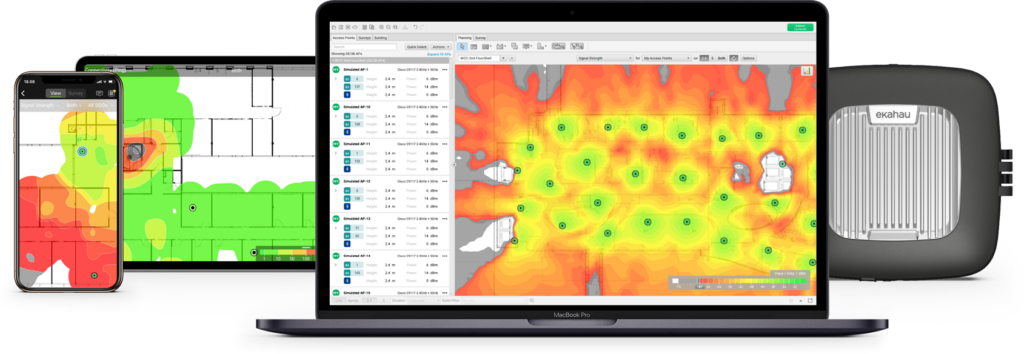
- Design and planning of the LAN and Wi-Fi infrastructure
- Installation and commissioning with minimal disruption to daily operations
Implementation
The requirements for the new LAN and Wi-Fi infrastructure were discussed in detail with the client. The client preferred a unified infrastructure, meaning that all active network components should come from a single vendor. A cloud-based solution was also preferred to allow centralized management of all components and quick access to external support resources if needed. In addition, the solution needed to be scalable to support future locations.
The final decision was made in favor of the Extreme Networks Cloud IQ (XIQ) solution, using Wi-Fi 6 access points and a completely new switching infrastructure.
Challenge
The existing infrastructure included equipment from multiple vendors and had grown over many years with changing internal and external administrators. The Wi-Fi analysis at the Herford site showed that logistics operations were only partially functional, preventing smooth process execution.
This resulted in the following steps:
- Analysis of the existing infrastructure followed by concrete recommendations
- Presentation of possible solution approaches
- Customer decision to modernize the LAN and Wi-Fi infrastructure to a unified platform
- Replacement of legacy components (802.11b/g – Wi-Fi 3) with modern Wi-Fi 6 (802.11ax) hardware
- Ensuring stable communication in logistics using handheld terminals as well as office applications and collaboration tools such as MS Teams and Zoom
- Primary focus on reliable logistics processes
Technology
After detailed planning of the LAN and Wi-Fi infrastructure, 22 AP305C access points with integrated antennas (2×2:2) were deployed in the logistics areas and adjacent offices. In the LAN environment, Universal Switches from the 5320 series (various models) were installed.
Installation of LAN and Wi-Fi components was carried out in parallel with the existing infrastructure. First, the old Wi-Fi devices were deactivated and the new access points were put into operation. Afterwards, the wired clients were migrated to the new switches.
This phased approach enabled a smooth migration with minimal disruption to ongoing operations.